The founder
Prof. Dr.
Wolfgang Heilmann
Long before founding the foundation, he developed social utopias and asked how technological progress could help make society more humane.
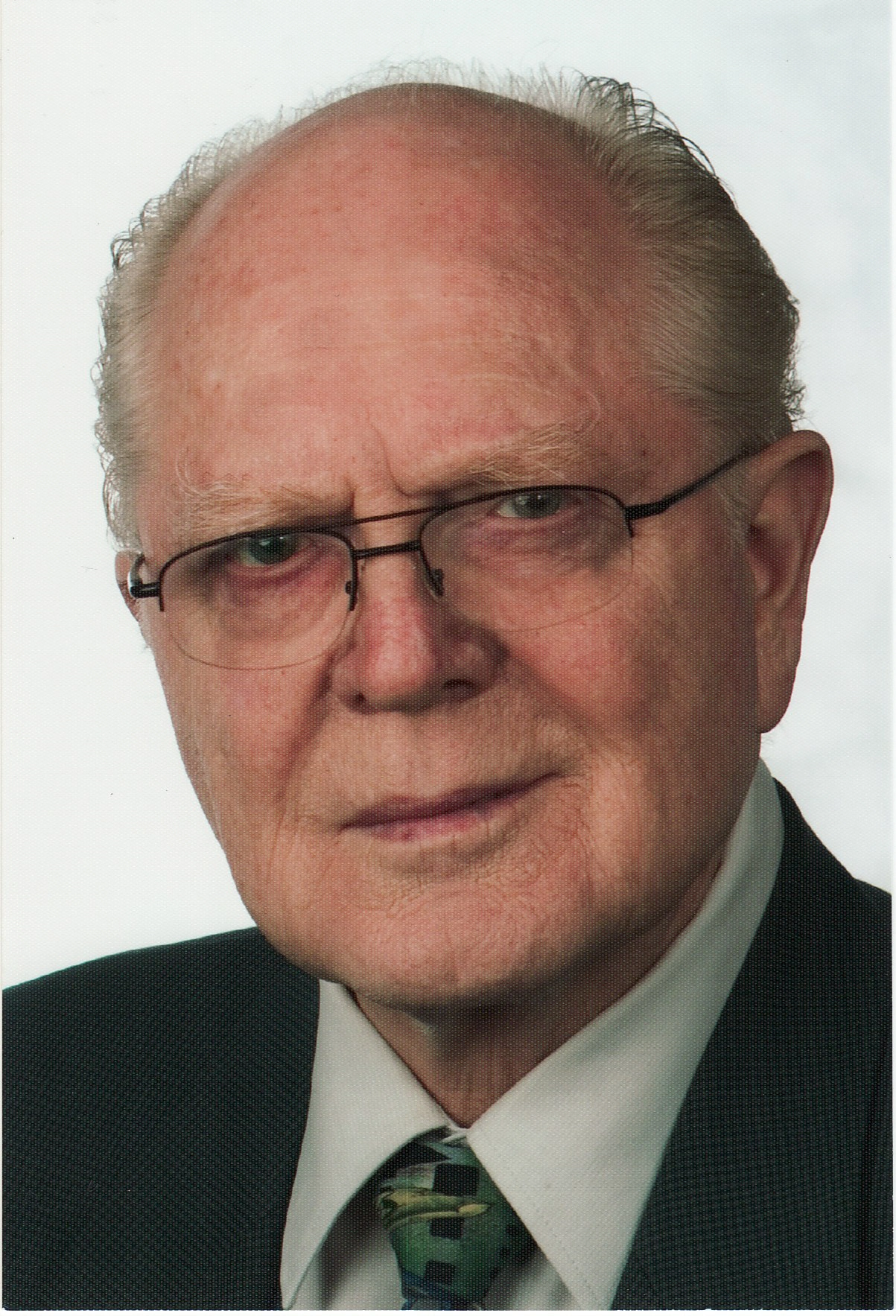
Founder and donor
Prof. Dr. Wolfgang Heilmann
Donor · Founder · Honorary President 1930–2022
Before Wolfgang Heilmann devoted his creativity and determination to visions of making society more humane through information technology, he was a successful entrepreneur.
He recognised the importance of information processing for business remarkably early. In his 1962 essay ‘Thoughts on integrated data processing’, he described the possibility of mechanising office work and integrating workflows.
Life
Short biography
- 1930
- Born in Lower Silesia, from which he was displaced in his youth.
- 1951
- Completed his Abitur in Alfeld an der Leine.
- 1959
- Doctorate at the University of Tübingen under Prof. Dr. Hero Moeller with the dissertation Die Sozialutopien und der Sozialutopismus. Eine Untersuchung über die Grenzen der Sozialpolitik, following studies in economics and philosophy in Frankfurt am Main and Tübingen. Von der Utopie zur Ideologie was published in the same year.
- 1964
- Founded the ‘Arbeitsgemeinschaft für integrierte Datenverarbeitung’, later INTEGRATA, after working for IBM Germany in Stuttgart and Maschinenfabrik Gustav Wagner in Reutlingen.
- 1995
- Awarded the Federal Cross of Merit.
- 1999
- Appointed honorary professor at the University of Karlsruhe, focusing on telework processes. Previously held teaching appointments in Tübingen and Stuttgart and guest professorships at Tongji University Shanghai, Dresden University and Lomonosov University Moscow.
- 2000
- Founded the Integrata Foundation for the Humane Use of Information Technology.
- 2016
- Became Honorary President of the Integrata Foundation.
Origins of the foundation
INTEGRATA
The foundation's capital came from the proceeds of the sale of Integrata Unternehmensberatung, which Wolfgang Heilmann had founded in 1964.
After working for IBM Germany in Stuttgart and Maschinenfabrik Gustav Wagner in Reutlingen, he founded the ‘Arbeitsgemeinschaft für integrierte Datenverarbeitung’ in 1964. Integrata Unternehmensberatung, organised as an employee-owned company, developed into one of Germany's leading consulting firms.
In 1989 the company was converted into a public limited company. Subsidiaries included Integrata Training AG, Integrata Unternehmensberatung and Switzerland-based Integrata International. Training AG became Germany's largest IT training provider and was listed on the Stuttgart stock exchange from 1997. In July 1998, the French company Unilog acquired the shares.
Under his leadership, Integrata trained and educated thousands of people in information technology across the German-speaking world from its base in Tübingen over several decades.
How he led
The humane idea in practice
What ‘humane use’ meant to him was first visible in his own company.
The company flourished in the 1980s and created hundreds of jobs. Employees were given opportunities to participate early on, and Wolfgang Heilmann himself supported the establishment of a works council.
Integrata moved into premises in the former Zanker factory in Tübingen, a place that visibly reflected the technological shift from mechanics to computer technology.
Supporting the arts was also particularly important to him. His concept of concert vernissages was an established part of Integrata's corporate activities for two decades.
A personal perspective
Why a foundation
After his regular professional career ended, his interests shifted even more towards social policy. Founding the Integrata Foundation turned these ideas into a lasting project.
The idea for the foundation grew out of concepts Wolfgang Heilmann had already developed in his doctoral research. He applied his examination of the limits of social policy to the increasingly important field of information technology. IT should serve as many people as possible, not merely drive rationalisation and automation, but above all improve each individual's quality of life.
For him, the term ‘humane’ should be oriented towards human beings as biological beings; he drew on evolutionary humanism as a foundation. Because social consequences should be examined and discussed collectively, he also spoke of democratic humanism.
According to the founder's historical texts, recognition of the foundation required special approval from the Minister-President of Baden-Württemberg because ‘humane use’ was not defined in law as a separate charitable purpose.
The foundation's aim is to promote the improvement of people's quality of life through the humane use of information technology.
The foundation
The ten theses
Wolfgang Heilmann formulated ten areas of human life in which information technology should contribute to improving quality of life. The theses are intended as goals.
Health and well-being
Preservation and restoration of physical and mental health.
Security and freedom
Maintaining internal and external security while safeguarding human freedom and dignity.
Freedom of movement and encounter
Creating and safeguarding freedom of movement and humane transport conditions that enable personal encounters.
Information and communication
Restoring trust between communication partners through responsible handling of information and fair communication.
Education and training
Opening access to education and training according to individual abilities while safeguarding ideological neutrality in education and entertainment.
Work and livelihood
Creating sufficient high-quality work and earning opportunities tailored to people in order to promote the common good and prosperity for all.
Leadership and responsibility
Developing information technology into a useful set of tools for people leading people in business and society.
Politics and society
Promoting citizens' participation in public opinion-forming and shaping the community in a balance of freedom, law and justice.
Nature and environment
Protecting nature and the environment from exploitation and destruction for the benefit of natural processes and future generations.
Culture and religion
Overcoming modern people's lack of meaning and time in favour of a dignified way of life with leisure for culture and religion.
Publications
Writings of the founder
From 1968, Wolfgang Heilmann published the ‘Schriftenreihe für integrierte Datenverarbeitung’ and authored more than fifty works. The existing lists make these publications accessible again.
- Complete list of publications Papers, books and lectures in chronological order
- Publications relevant to the foundation Selection directly related to the foundation's purpose
In memoriam
Obituary
Prof. Dr. Wolfgang Heilmann died on 25 July 2022. Despite health problems, he remained actively connected to the foundation with his ideas and suggestions into old age.
In private life he was a world traveller who visited almost every region of the globe, including North Korea and Antarctica. High mountains also attracted him: the Matterhorn, Mont Blanc and Kilimanjaro were among the peaks he climbed.
Few people succeed in turning their own visions into reality to the extent that Wolfgang Heilmann did.
The award bears his name
Originally awarded as the ‘Prize for Integrated Data Processing’, the award was refocused on the humane use of information technology in 1999 and today bears Wolfgang Heilmann's name.